Free shipping over $50 1-888-451-0363

Master the Art of Mending

We recently released a Q&A episode where Briand discusses the how-to and importance of mending and provides valuable insights for both beginners and seasoned fly fishermen. 

Mending plays a crucial role in achieving a natural drift and preventing drag, ultimately increasing your chances of success on the water. Let’s explore the key takeaways from the video.

  • The Importance of Line Control and Equipment Choices

  • In response to a viewer’s question about switching fly lines, Brian emphasizes the significance of adapting your equipment to different fishing situations. While a floating line is versatile and suitable for most scenarios, specialized lines like sink tips or sinking lines are essential for streamer fishing or nymphing.


  • Brian advises carrying multiple rods or reels with different line setups to switch between techniques effortlessly. Alternatively, using extra spools or an Omnispool Switch Box can provide a convenient solution for those who prefer to have a single reel but want to switch lines quickly on the water.

  • Mending: Enhancing the Drift

  • Brian responds to another viewer’s query about mending techniques. He breaks down the fundamentals of mending by illustrating how it combats drag, which occurs when different currents affect your line’s movement. 

  • By flipping the line upstream, anglers can create a more natural drift, allowing the fly to float freely. Brian emphasizes that mending is crucial for achieving a dead drift, especially when dry fly or nymph fishing. He demonstrates the simple flicking motion of the rod tip and advises anglers to avoid moving the fly excessively while mending.

  • Mastering Mending Techniques

  • Brian’s on-the-water demonstration in the video provides a visual understanding of mending and its purpose. He emphasizes that mending is about buying time for a natural drift and preventing the current from pulling the fly out of the target zone. 

  • By executing well-timed mends, anglers can significantly increase their drift duration, giving the fly ample opportunity to entice fish. Brian also highlights the importance of mending during nymph fishing, suggesting that constant mending is often required for an effective drift.


By understanding the purpose of mending and mastering the simple techniques demonstrated by Brian, anglers can enhance their fishing success by achieving longer and more natural drifts. Whether you’re a beginner or a seasoned angler, incorporating mending into your repertoire will undoubtedly elevate your fly fishing skills and increase your chances of landing that coveted catch.

Blane Chocklett’s Approach to Fly Design

 In the world of fly fishing, certain individuals leave an indelible mark, reshaping the industry and inspiring countless anglers. Blane Chocklett, a renowned fly designer and guide, stands as one of those trailblazers. 

In a recent video, Chocklett sat down with Brian to discuss his innovative approach to fly design and the Game Changers that have become his hallmark. This blog post delves into the fascinating insights shared by Chocklett, exploring the origins of the game changer fly and its transformative impact on the world of angling.


The Birth of a Game Changer 

Blane Chocklett’s journey into fly design began with a need for success as a guide. Drawing inspiration from mentors like Harrison Steves, he realized the significance of understanding the relationship between predators and their prey.


Armed with knowledge from books like Aquatic Entomology by McCafferty, Chocklett grasped the importance of effective fly design. His early experiments with larvae imitations and continuous collaboration with fellow innovators like Bob Popovics set the stage for what would eventually become the game changer fly.


Unraveling the Game Changer’s Evolution 

Chocklett’s pursuit of developing a fly that imitated fish-like motion led to his first creation, the gummy minnow, in 1998. Although it fell short of replicating the desired swimming action, it possessed the visual characteristics to trigger strikes. 

Undeterred, Chocklett continued experimenting, seeking the elusive recipe for lifelike movement. Through trial and error and invaluable input from friends like Henry Cowen and Shaw Grigsby, he honed his skills in fly design and discovered the essential elements of the game changer. By combining the right head shape, vertebrae-like structure, and carefully selected materials, Chocklett brought his vision to life.


Endless Possibilities and Game-Changing Flies 

Blane Chocklett’s game changer fly revolutionized fly fishing by capturing the captivating movement and realism of prey species. The game changer’s versatility is showcased by its effectiveness in targeting various fish species, from pike and muskie to largemouth bass and trout.


Recognizing that movement is a primary attractant for fish, Chocklett expanded his designs to encompass an array of creatures like hoppers, hellgrammites, and crustaceans. The constant innovation and exploration within this platform reflect the never-ending opportunities for anglers to discover new fly patterns and techniques.

Changing the Game

Blane Chocklett’s game changer flies have forever changed the landscape of fly fishing. Their widespread success and adaptability have made them a staple in the angling community.


To witness the transformative power of these flies firsthand, explore the collection on our website. Discover the original game changers, feather game changers, finesse changers, and micro variations, among others, each crafted to mimic the movements of natural baitfish and attract predatory fish species. Visit our website today and experience the game changer phenomenon for yourself.

Join the many anglers who have unlocked the game-changing potential of Blane Chocklett’s fly designs. Enhance your fly box with these innovative patterns and embark on your own transformative angling adventures.


Did you know we’re going to Florida with Blane Chocklett to visit Flip Pallot and the Renzetti Factory for a weekend of fly tying, fly fishing and story telling! Learn more and sign up here: https://www.madriveroutfitters.com/s-346-flip-brian-and-blanes-fly-tying-and-fly-fishing-weekend.aspx

How To Learn To Read Water in Fly Fishing

One key to a successful day on the water is understanding where fish live and how to read the water accurately.  We recently released a video where Brian delves into the intriguing topic of How to Read Water. Let’s take a closer look at the insights shared by Brian Fleishig and the team at Mad River Outfitters.

For years, a consistent question we get is: How can I read water and understand where the fish are? Well, the overwhelming interest in understanding how to read water, Brian admits that it’s an extensive subject that might be challenging to cover in a single video. However, he provides a solution by recommending three invaluable books that serve as essential resources for anyone seeking to unravel the secrets of water reading.

The Orvis Guide to Reading Trout Streams by the esteemed Tom Rosenbauer. Considered a Bible for trout anglers, this book provides a wealth of knowledge on finding fish and understanding their habitat within streams. Brian shares glowing reviews from influential figures in the fishing world, emphasizing the book’s enduring value and effectiveness in honing trout-catching skills.


Dave Hughes’ Reading Trout Water is the second book Brian highlights. Published more recently, this book offers a fresh perspective on the subject. With vivid color photographs, detailed drawings, and insightful explanations, Dave Hughes explores the nuances of trout behavior in different stream conditions. Brian suggests reading both Tom Rosenbauer’s and Dave Hughes’ books to gain a comprehensive understanding of reading water.

To round off the recommended reading list, Brian mentions Reading Waters by the accomplished angler and writer, Gary Borger. This book takes a broader approach, covering not only trout but also other fish species and different aquatic environments. With scientific insights and engaging storytelling, Gary’s book offers a unique blend of knowledge and entertainment for fishing enthusiasts. Brian concludes by encouraging viewers to explore these books as the ultimate resource for learning about reading water.


If you’re eager to deepen your understanding of reading water and uncover the secrets of fish behavior, definitely check out the full video, where Brian shares additional insights and practical tips.

Remember, the best way to truly grasp the intricacies of this fascinating subject is to explore the valuable knowledge found within the recommended books. So, dive into the world of water reading and unlock the hidden wonders beneath the surface!

OROS Strike Indicators Redefining Fly Fishing Bobbers

Immerse yourself in the serenity of a beautiful fall day, sitting by your favorite trout stream, relishing the nostalgic feel of a homemade rod and a traditional bobber rig. But what if we told you there’s an innovative product that can take you back to the innocence of your youth while enhancing your fly fishing experience? 

Meet OROS Strike Indicators—a groundbreaking evolution of the traditional fly fishing strike indicator (bobber). Let’s talk about OROS Strike Indicators and the reasons why they’re poised to dominate the bobber market for many years to come.

OROS Strike Indicators

Almost a year ago, Mad River Outfitters introduced the world to the OROS Strike Indicators, and they have since revolutionized the way we approach fly fishing. These smart indicators embody innovation and functionality, offering an unprecedented experience. Available in three sizes—small, medium, and large—the dual-color design is both visually appealing and functionally advantageous. With the ability to choose between red and white, pink, orange or a combination of all of the colors, these indicators cater to various lighting conditions, ensuring optimal visibility.


Unparalleled Convenience and Performance

The OROS Strike Indicators are designed to eliminate common pain points associated with traditional bobbers. With no small parts to fumble or lose, their streamlined design is centered on the line, enhancing balance and casting efficiency.


The indicators enclose the fastening hardware within molded EVA foam hemispheres, ensuring a secure pressure fit lock without kinking the line. The effortless securing process involves unscrewing the foam-grip hemispheres, placing the line in the screw slot, and screwing the indicator shut. Repositioning between sections of line requires just a simple half twist.


Unmatched Features and Details

These exceptional strike indicators offer an array of features and details that set them apart from the competition. Not only do they float as much or even more weight than the current leading brand, but they also boast a smooth surface designed to repel water and dirt, reducing drag during casting. Additionally, they are made with a biodegradable additive, ensuring accelerated biodegradation when exposed to natural environments over time. The versatile color options allow anglers to mix and match the top and bottom colors for optimal visibility


.

Experience the difference that OROS Strike Indicators can make in your fly fishing endeavors. Watch the full YouTube video by Mad River Outfitters, where Brian Fleishig shares his enthusiasm and personal experience with these revolutionary indicators. You can also check out our original OROS review here.


To elevate your fly fishing game and purchase your very own OROS Strike Indicators, visit our website and explore the options available. Whether you’re a seasoned angler or a beginner, these indicators will enhance your fishing experience, bringing you closer to nature and unlocking new levels of success on the water.

The Importance of Cleaning Your Sinking Fly Lines

Fly anglers understand the significance of having well-maintained gear to enhance their fishing experience. While much attention is often given to rods, reels, and flies, the condition of your fly line should not be overlooked. 

In a recent video on the Mad River Outfitters YouTube channel, Brian Flechsig discusses the importance of cleaning sinking fly lines and offers valuable insights on how to do it correctly. In this blog post, we’ll explore the key points covered in the video and highlight the significance of cleaning your sinking fly lines for optimal performance.


Sinking Fly Lines Role

Sinking fly lines play a crucial role in fly fishing, allowing anglers to target fish at specific depths. However, over time, these lines can accumulate dirt, grime, and other debris, hindering their performance. Brian emphasizes the need to clean sinking fly lines to maintain their functionality. By removing the built-up residue, you can enhance the line’s casting ability and sink rate, ultimately improving your chances of success on the water. 

Neglecting to clean your sinking fly lines can lead to decreased performance, reduced accuracy, and even potential line damage. Therefore, regular cleaning is essential to ensure optimal performance and longevity.


Cleaning Recommendations

Brian shares his recommended cleaning process for sinking fly lines in the video. He demonstrates the use of the Loon Sink Fast solution along with Scientific Anglers’ cleaning pads. It’s crucial to use the appropriate cleaning solution specifically designed for sinking lines, as using a flotation-based solution can adversely affect the line’s sinking properties. 

By following Brian’s method, which involves scouring off dirt and grime using the spongy side of the cleaning pad and applying the Loon Sink Fast solution, you can effectively clean and lubricate your sinking fly line without compromising its sinking capabilities. This cleaning process restores the line’s slickness, allowing for improved casting, better line control, and a more natural presentation.

See How it’s Done

To gain a comprehensive understanding of the proper technique for cleaning sinking fly lines, it’s highly recommended to watch the full video on our YouTube channel.


Brian provides visual demonstrations, additional tips, and in-depth explanations that will aid in your understanding and application of the cleaning process. Remember, taking care of your fly line is an integral part of maintaining your fly fishing gear, ensuring that you’re always ready for a successful day on the water.

Embark on an Unforgettable Fly Fishing Adventure: Andros Island Bonefish Club

Escape to the pristine shores of Andros Island, home to some of the world’s finest bonefishing. Nestled in Cargill Creek, Andros Town, Bahamas, the Andros Island Bonefish Club (AIBC) has become synonymous with unparalleled angling experiences. The club’s prime location, a short boat ride away from the legendary “Westside” or the “Land of the Giants,” adds to its allure. Join Mad River Outfitters on our yearly trip to this tropical paradise and witness the magic of bonefishing firsthand.

Andros Island, the largest island in the Bahamas chain, remains a hidden gem with its untouched beauty and sparse population. As the king of The Bahamas’ Out Islands, Andros boasts abundant natural attractions that cater to diverse interests, from adventurers to fishermen. 

Whether you seek a laid-back beach getaway or an adventurous expedition, Andros Island offers the perfect blend of tranquility and excitement. Explore its kayaking routes, bird-watching spots, hiking trails, snorkeling sites, and pristine fishing grounds, making it an idyllic vacation destination.


At Andros Island Bonefish Club, experienced guides are the backbone of every successful angling trip. With over 50 years of expertise, the team led by Captain Rupert Leadon ensures an unparalleled fishing experience. Today, Captain Rupert’s son, Shawn Leadon, continues his father’s legacy, leading and training a competent staff of native guides. Their intimate knowledge of the flats and waterways, combined with their passion for hosting and guiding, guarantees that you will be in capable hands. The entire staff at the club, from guides to housekeepers, works together to create an unforgettable stay for every guest.


Mad River Outfitters proudly collaborates with Andros Island Bonefish Club, offering you the opportunity to join their upcoming hosted trips. Imagine casting your line amidst the endless flats, surrounded by the breathtaking beauty of Andros Island. Lefty Kreh, a renowned angler, hailed Andros as the ultimate bonefishing destination, and you’ll soon discover why. 

The trips are designed to be hassle-free, with Mad River Outfitters taking care of logistics and providing a representative to ensure a seamless experience. Visit our website, check out the trip details, and sign up for this remarkable adventure of a lifetime.

To learn more about Mad River Outfitters’ yearly trip to the Andros Island Bonefish Club and secure your spot, visit our website and sign up today. Don’t miss the chance to explore the world’s best bonefishing destination and create lasting memories in the enchanting surroundings of Andros Island.

Exploring the Future of Fly Fishing: A Conversation with Kelly Galloup

We had the pleasure of sitting down with angler and fly designer, Kelly Galloup, on a lake near his famous Slide Inn on the Madison River in Montana. During the interview, Brian Flechsig and Kelly Galloup delved into various topics, including their long-standing friendship and collaboration. 

However, one particular aspect that captured their attention was the future of fly fishing. We wanted to look more into their fascinating conversation and their shared insights on the evolving landscape of this beloved sport.


The interview kicked off with Brian Flechsig and Kelly Galloup reminiscing about their 31 years of friendship and collaboration. They fondly recalled their early days spent together at the pier marquette river lodge, where they worked alongside industry legends such as Walt Geryk and Charlie Weaver. This trip down memory lane highlighted the deep bond forged over the years and the invaluable guidance Kelly provided Brian as he embarked on his journey in the fly fishing industry.

The Evolution of Streamers 

As the conversation shifted to the impact of modern streamers on fly fishing, both Brian and Kelly emphasized the transformative nature of these flies for pursuing trophy trout. They acknowledged how the groundbreaking book, “Modern Streamers for Trophy Trout,” authored by Kelly, revolutionized the industry. 

Brian further commended Kelly’s pattern designs and credited him for creating an entire segment of the fly fishing industry. The proliferation of articulated flies and sinking lines were also discussed as essential developments that have transformed the way anglers fish for trophy trout.


The Future of Fly Fishing 

Brian and Kelly shared their optimism about the future of fly fishing, particularly with regards to engaging younger generations. They recognized the growing enthusiasm among youth anglers, attributing it to the excitement and appeal of modern streamer fishing. They noted the positive shift in the industry’s demographics, with more young anglers venturing into fly tying and actively participating in the sport. Both agreed that the accessibility of online resources, social media platforms, and YouTube tutorials has played a pivotal role in cultivating a thriving community of passionate fly anglers.


In this video, Brian Flechsig and Kelly Galloup offered their unique perspectives on the future of fly fishing. Their shared experiences and insights shed light on the evolving dynamics within the sport, including the impact of modern streamers, the increasing engagement of youth anglers, and the positive growth of the industry.


With their unwavering enthusiasm and dedication, it’s evident that both Brian and Kelly remain committed to shaping the future of fly fishing for generations to come. If you haven’t seen our series of our time in Montana, definitely give it a watch and let us know what you think!


Friday Flies: Blane Chocklett’s Mini Feather Jerk Changer Tied by Pat Kelly

The Jerk Changer is one of the many brainchild’s of Blane Chocklett and just one of his many contributions to the fly tying and fly fishing industry. In 2009 I can remember meeting Blane Chocklett for the first time. I was invited to the International Fly Tying Symposium in Somerset, NJ. While taking a rare and much needed break to get up and stretch my legs I knew I did not have much time and I knew exactly what I wanted to do with the little time I had, go meet Blane! Up to this point in my life he was only someone I had heard/read about. Other than myself and a couple of friends, he was one of only a few people that were consistently catching Musky on a fly rod at the time. As a kid it took most of the courage I could muster up just to approach this legend of the tying/fishing industry. Fast forward thirty minutes later while walking back to my table and I could not believe what a nice, down to earth and humble person he was. Getting a chance to talk to him about fly design and musky flies back then was a game changer for me as I was just a couple years into my professional career as a fisherman and guide. Looking back and reflecting on that weekend in 2009 there were a couple things I never would have imagined (at the time). First and most importantly was the friendship I gained from that introduction. Blane is one of the most kind and genuine people I have ever met and I can call him a friend for life. I can not thank you enough for all your support and encouragement over the years. Secondly, was the positive impact and the amount of change he would have on our sport and all of the good he has done. 

The Jerk Changer, like most of his patterns, is a platform. It can be adapted, tweaked, and manipulated to be used in a variety of different watersheds for a variety of different species. For that reason, it is one of my all time favorite flies. Big or small, natural or synthetic, it doesn’t matter which, just tie some and go fishing and I am confident you will enjoy this pattern as much as I do!
Step 1: Start by inserting a 10mm Next Gen Shank into the vise and lay down a foundation of thread from the eye all the way to the back. Cut a small bunch of UV Polar Chenille – Gold and tie in so it extends behind the shank. Try to keep this material as close to its full length as possible. This part of the fly serves two purposes. One is to add inner flash to the tail. Second is to provide some rigidity under our tail feathers, this will help keep the feathers flat but also keep them straight and prevent them from twisting during the tying and fishing process.
Step 2: Select two or three small and narrow hen feathers from the top of the saddle and tie them in on each side of the shank with the concave side of the feathers facing inward toward each other. 
Step 3: Select a piece of Chocklett’s Finesse Chenille- Medium, strip away some of the fibers exposing the core, tie in and make two or three open spiral wraps and tie off, leaving approximately one eye width of room. 
Step 4: Select two more hen saddles similar in size to your tail feathers, tie in by the tip and palmer them forward to the eye and tie off. Finish with a little Z-Ment for durability.
Step 5: Before removing this shank, attach the next 10mm shank. Once attached insert into the vise. Be sure to wrap your base of thread as far back up the shank as you can. This will help build a finished fly with minimal gaps and spacing between sections.

Step 6: Just as before tie in the Finesse Chenille- Medium and wrap forward leaving just enough room to palmer two hen saddles. Keep in mind that the hen feathers you select for this next section are a little longer and a little wider. This will help build shape and size to the finished fly. Tie in feathers wrap forward to the eye and tie off. Finish with a dollop of Z-Ment.
Step 7: Insert Ahrex SA280 #6 hook into the vise and begin to tie down the articulation wire. Secure the wire to just down into the bend of the hook. Slide on the previous shank and tie down second strand of the wire. I take the wire and secure it up to the eye of the hook. There is no need to double back the wire for security as there will never be any amount of pressure hanging or pulling from it.

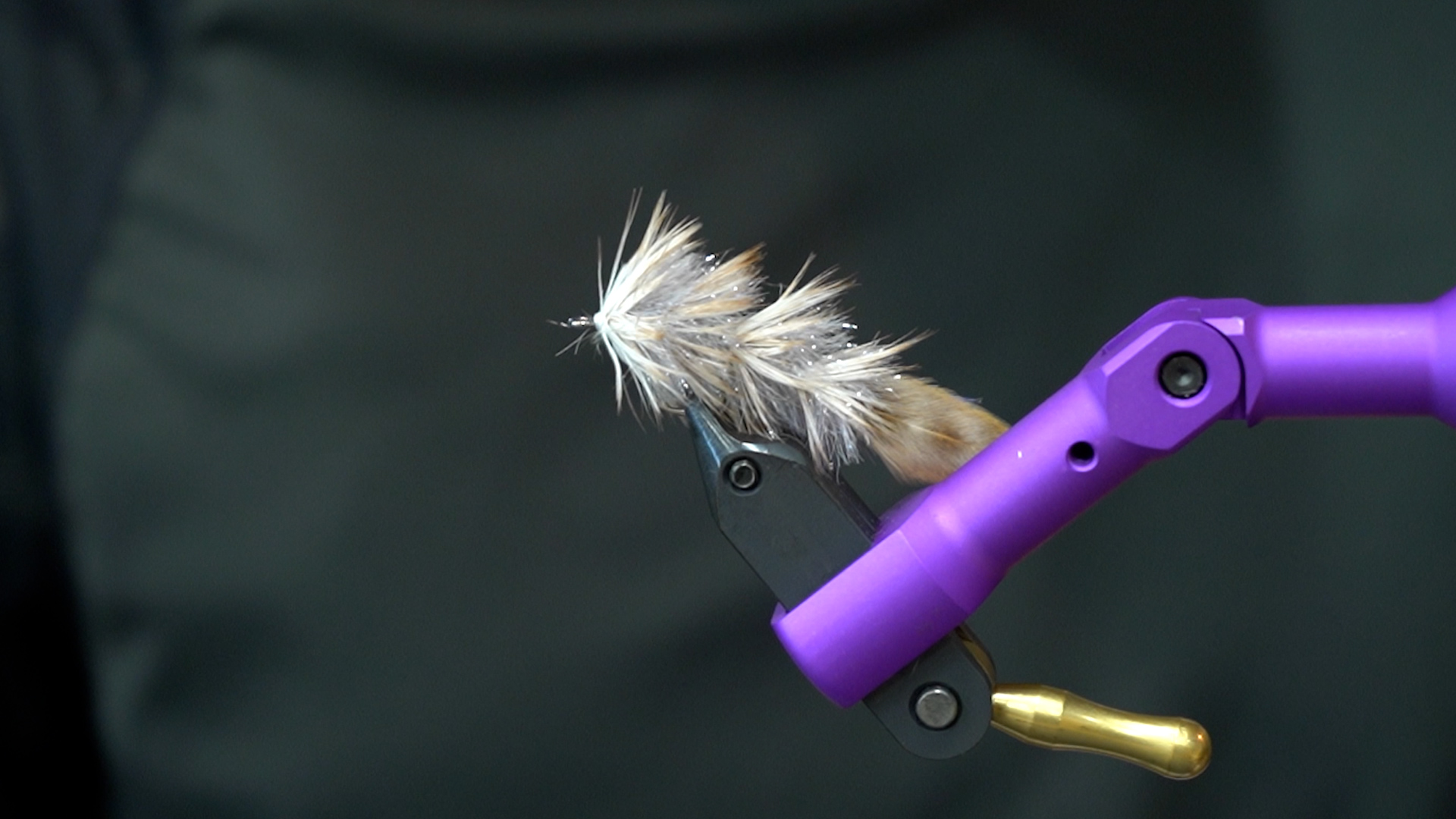
Step 8: Tie in your Finesse Chenille- Medium and wrap tight touching wraps all the way to just between the point of the hook and the barb and tie off. Select two more feathers, again slightly wider and larger. Tie in and palmer forward and tie off. At this point you should be about halfway up the hook shank. 
Step 9: Repeat the previous step one more time. Adding a second station of prop material and palmered hen saddles. If done properly this will take you all the way to the eye of the hook. Tie off and secure with Z-Ment.
Step 10: Attach the 35mm Shank to the hook and insert into the vise. As before you will want to start your thread at the eye of the shank and lay a good foundation all the way and as far back as is possible. Again, this will minimize the gaps in the finished product giving you a cleaner looking fly.
Step 11: Same as before you will attach the Finesse Chenille (this time using the Large Finesse Chenille) to the shank and wrap tight touching wraps approximately a quarter of the way up the shank. Once tied off you will want to give a slight trim to the Chenille so that it is not quite at full length. Palmer a couple more hen saddles, tie off, and secure with a dollop of Z-Ment. 
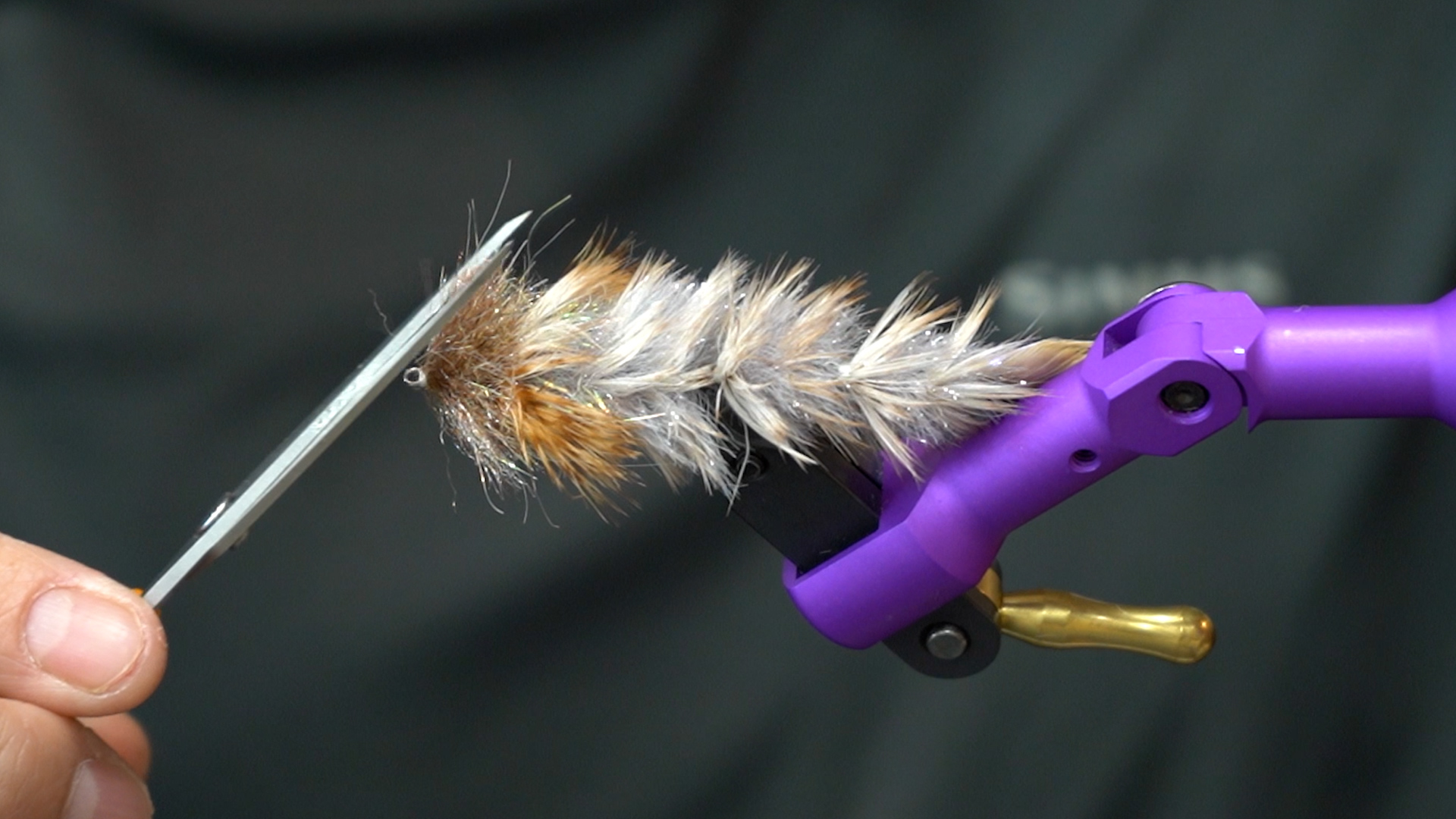
Step 12: Repeat the previous step. Only thing that will be done differently is you will want to leave the Finesse Chenille- Large at full length. At this point, this should be the second station of prop/veil on the front shank.
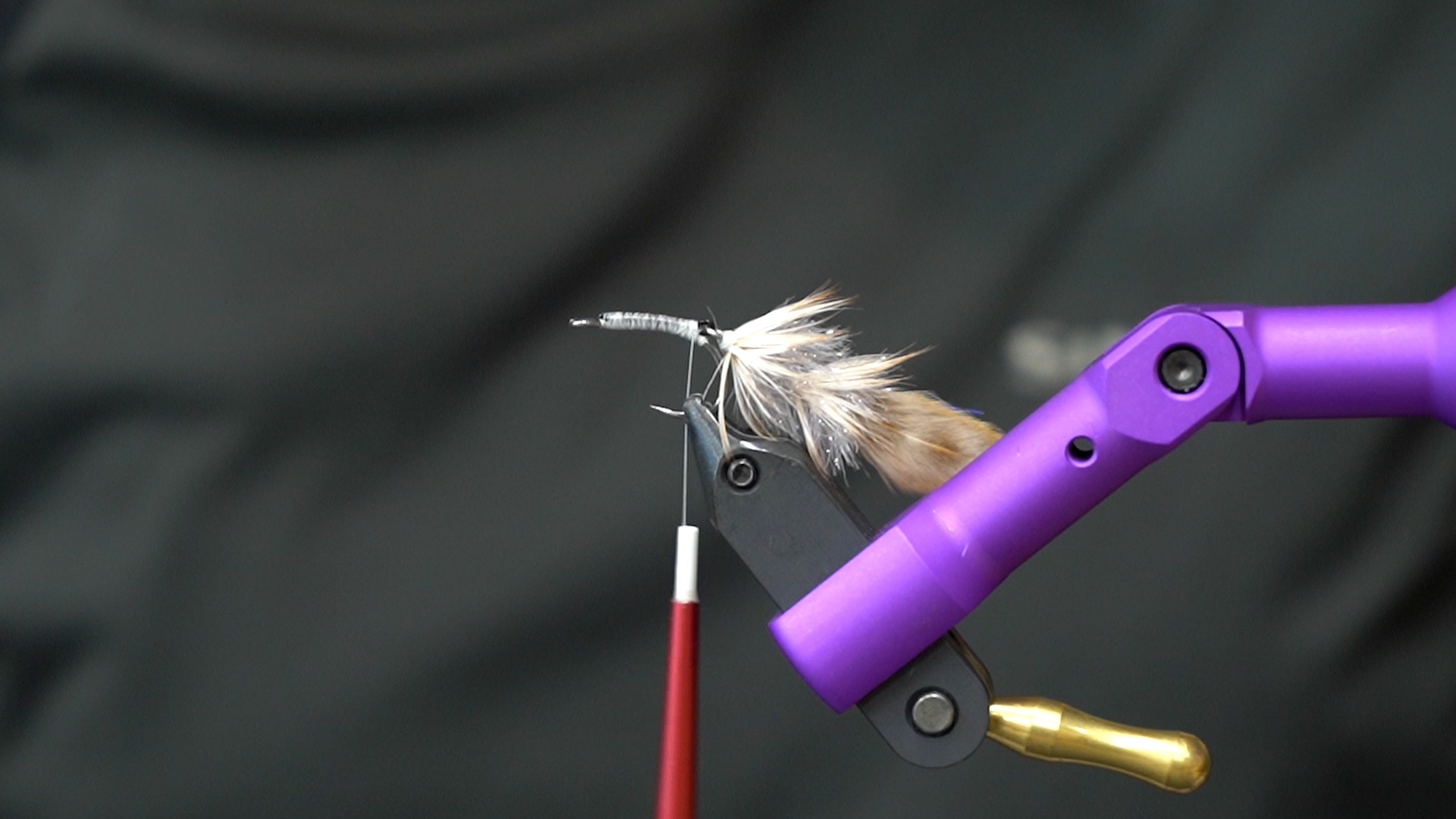
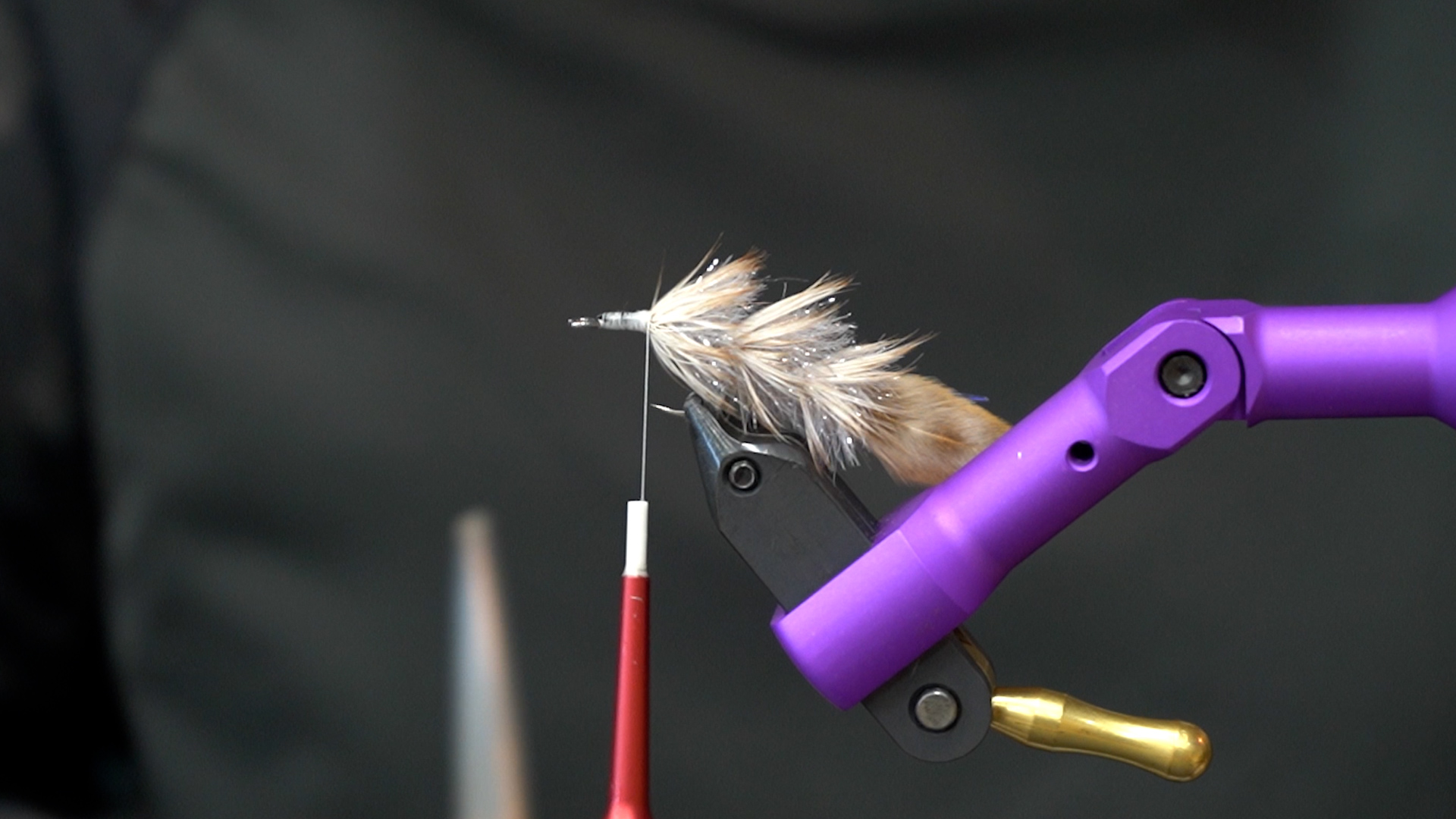
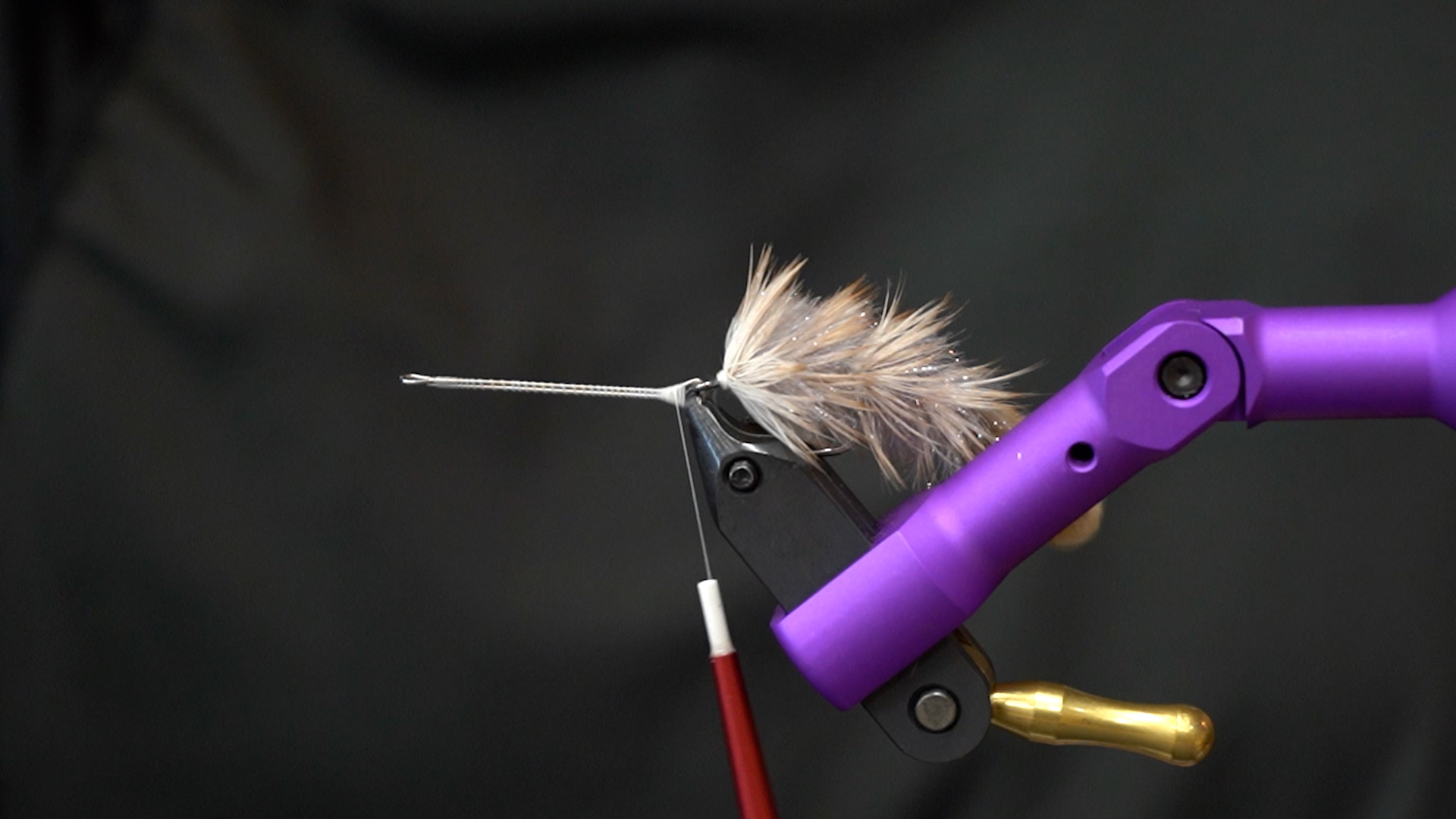
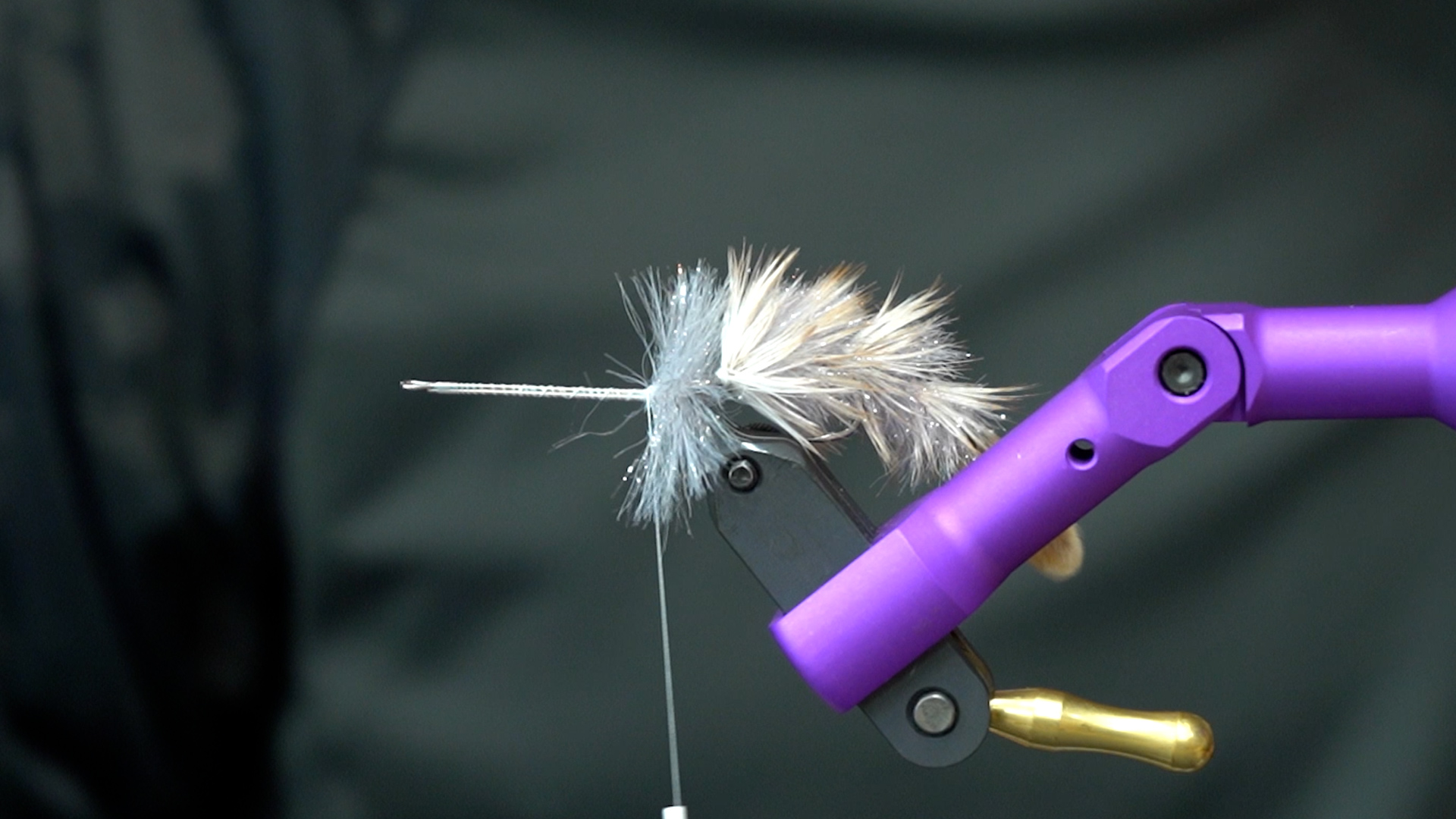
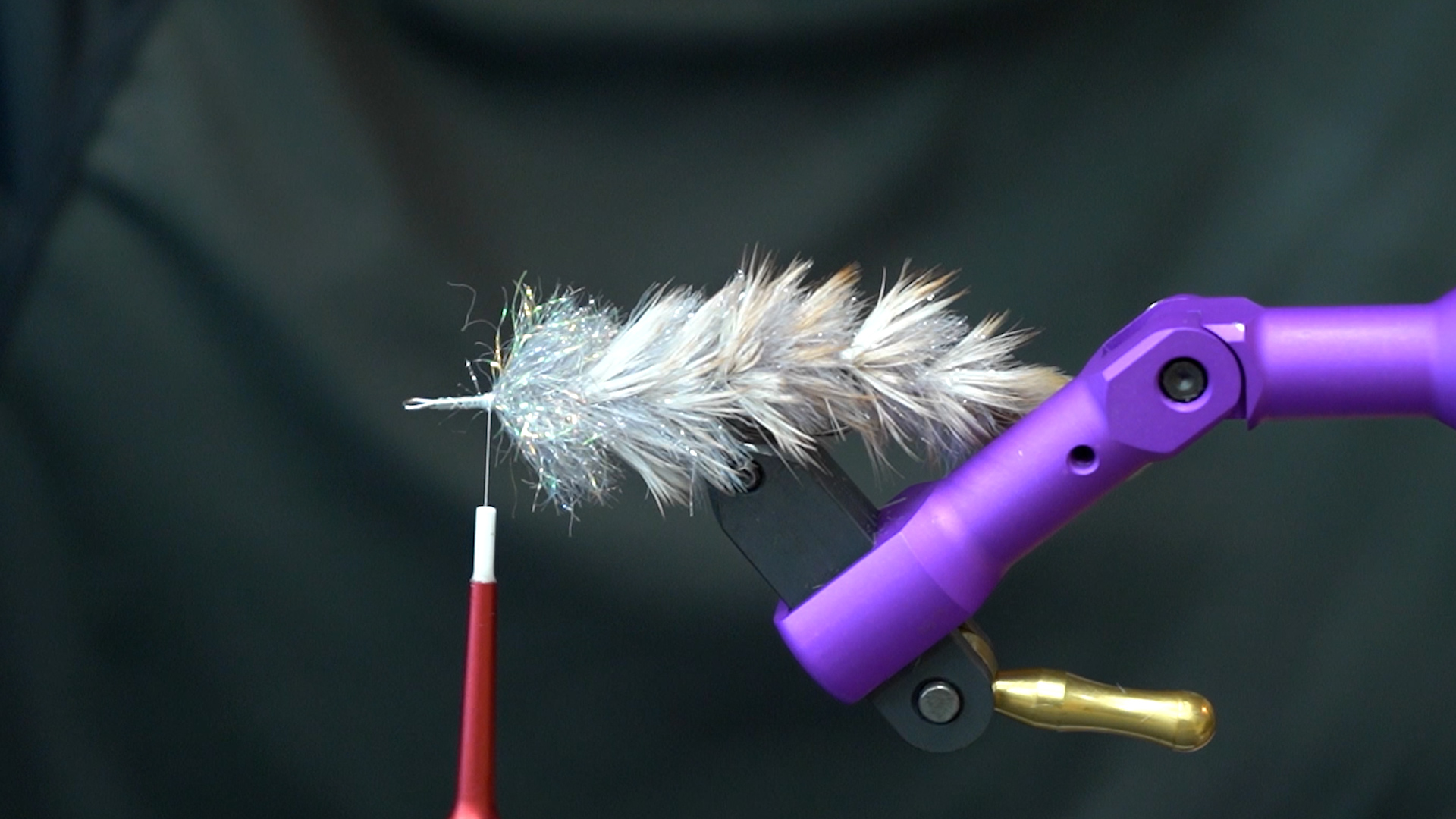
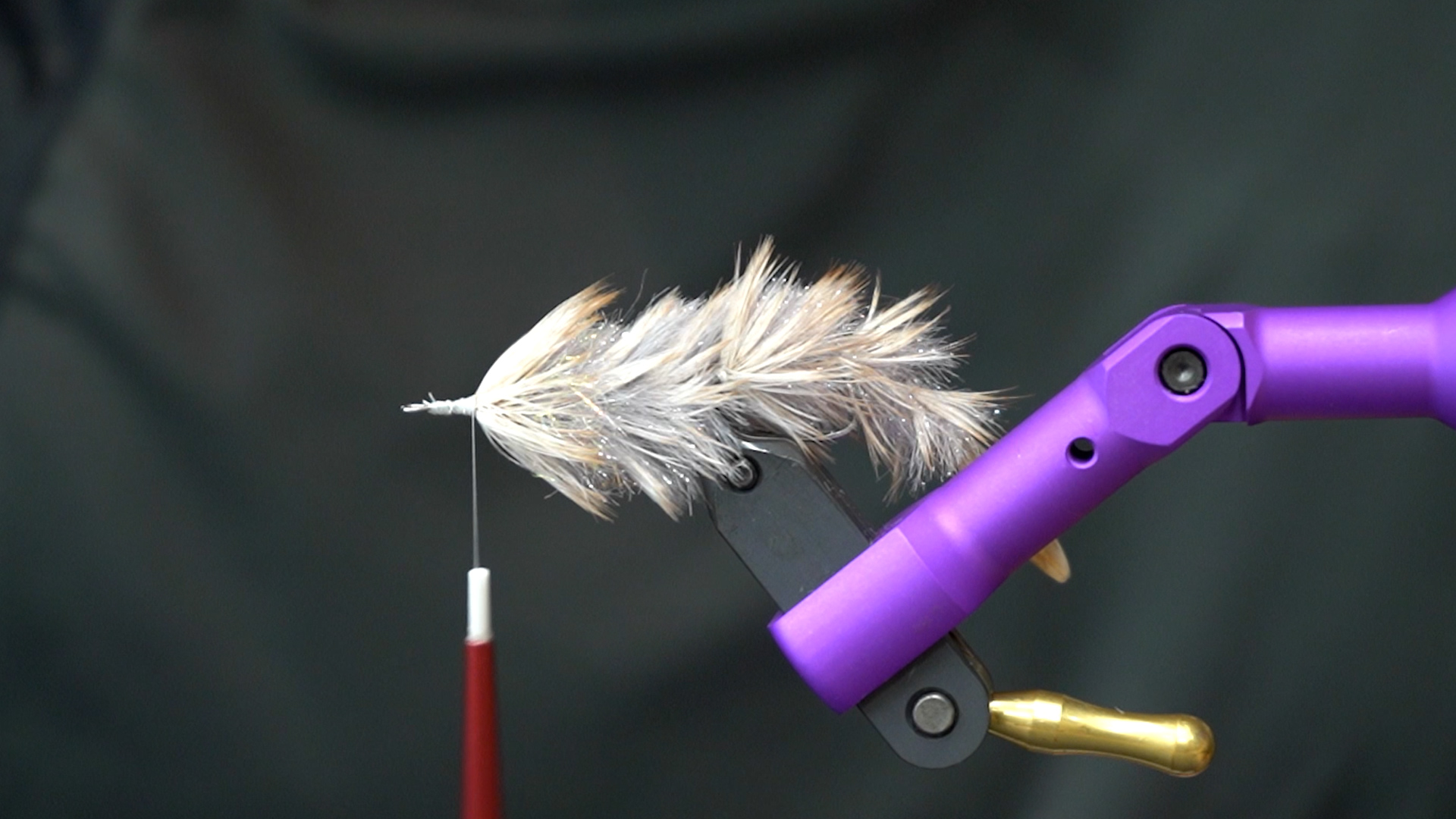
Step 13: This third and final station will vary a little as we are switching over to Chocklett’s Filler Flash for the prop on this station. By switching over to the Filler Flash we are able to add a little more height and rigidity to our final prop. It also allows me to sneak in a little more flash than you can achieve with the Finesse Chenille or a brush. Once the prop has been tied in and secured you will want to veil it with 3 Hen Saddles that are quite a bit longer, wider, and webbier. This will help bring density to the front of the fly. Tie of and secure with Z-Ment.
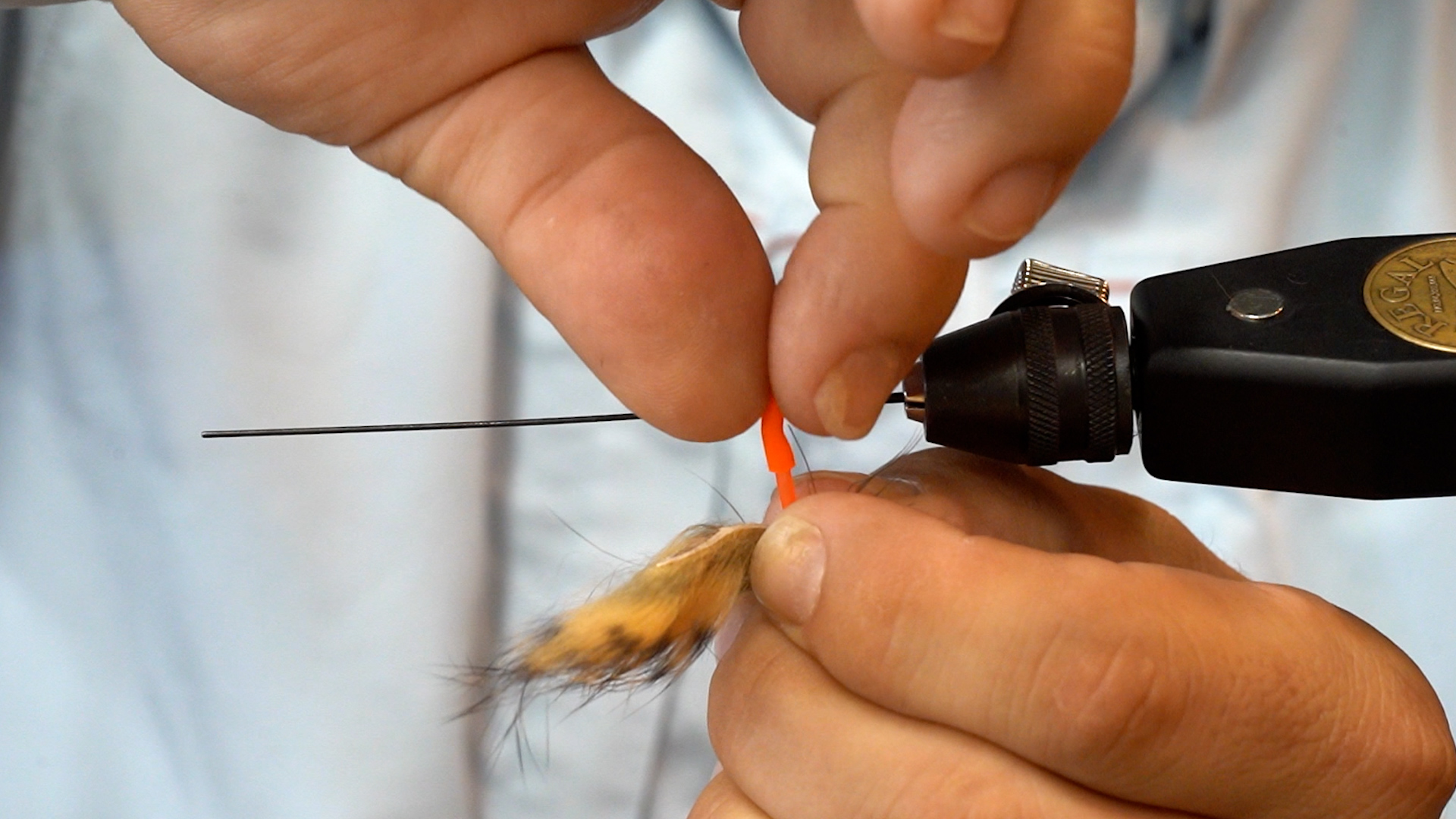
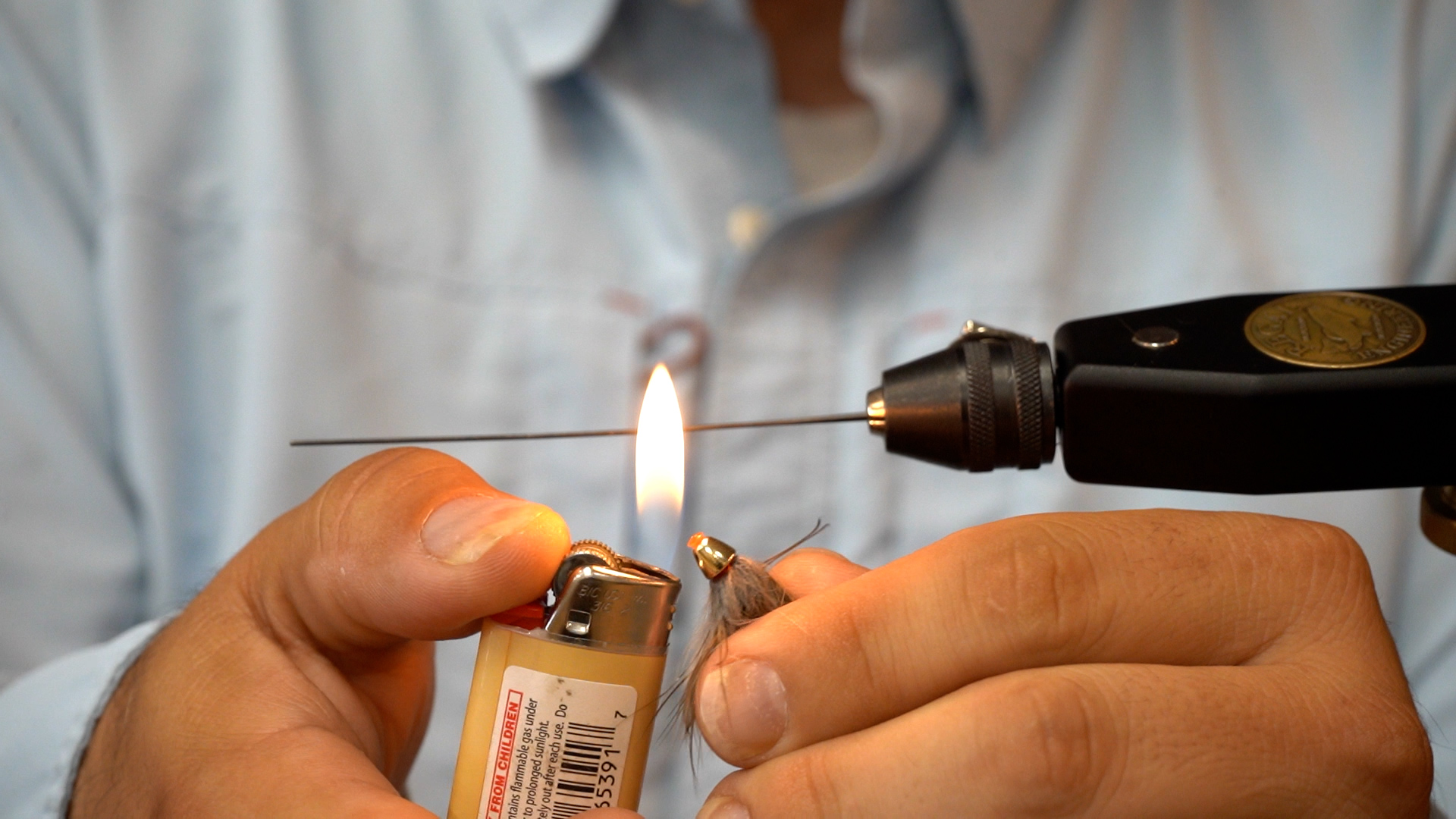
Step 14: At this point you should be about 75% of the way up the shank. Next we will tie in pectoral fins. I often say this step is optional but as I look back and reflect on any baitfish changer I have ever tied, I always include pec fins (unless accidentally forgotten about haha). Traditionally pec fins are made of hackle/saddle tips and if you want to use that feel free, this is Merica’ after all. I got a little bored with that and decided to use the tips of a Montana Fly Company barred mini marabou feather instead. 
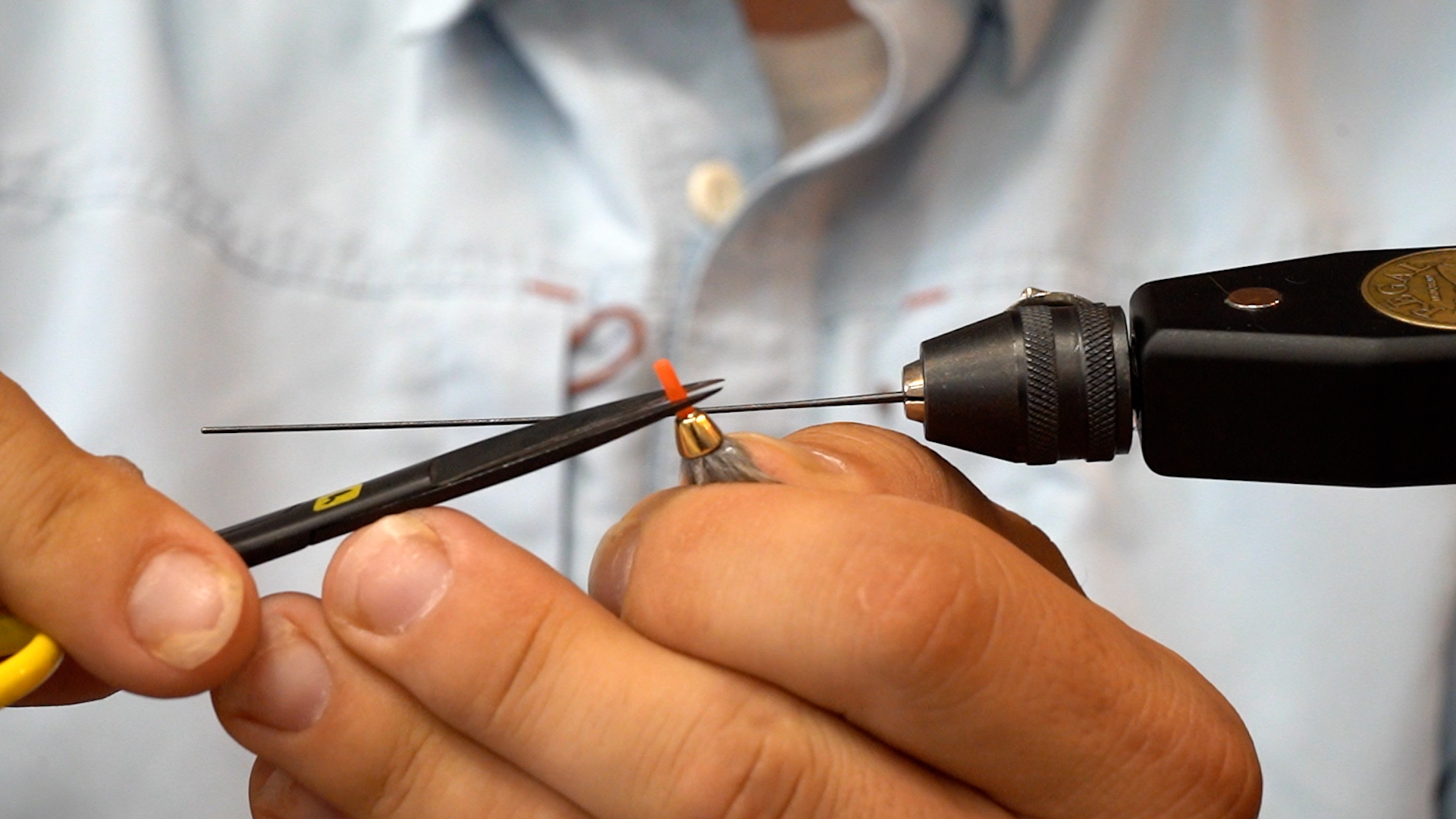
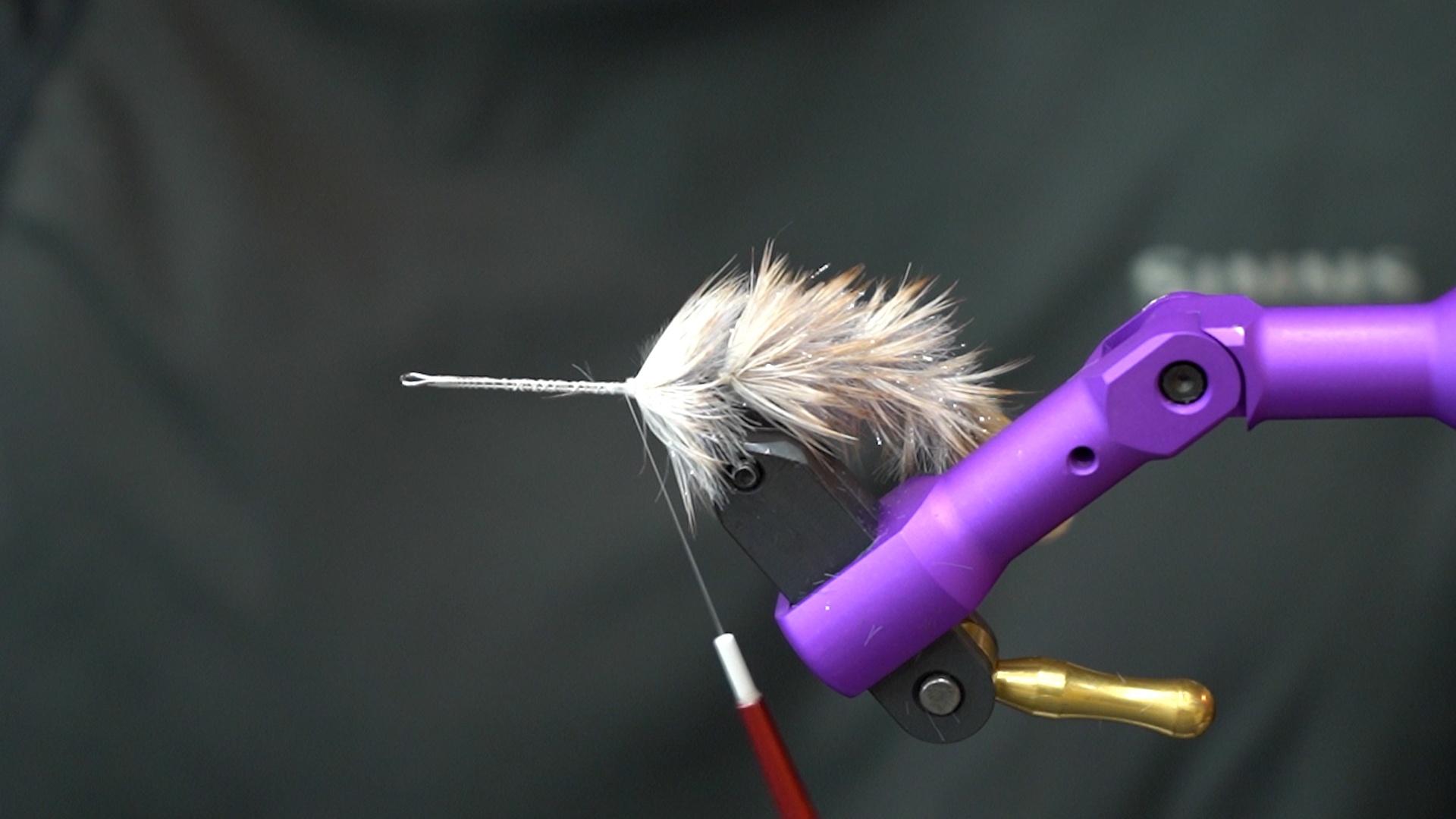
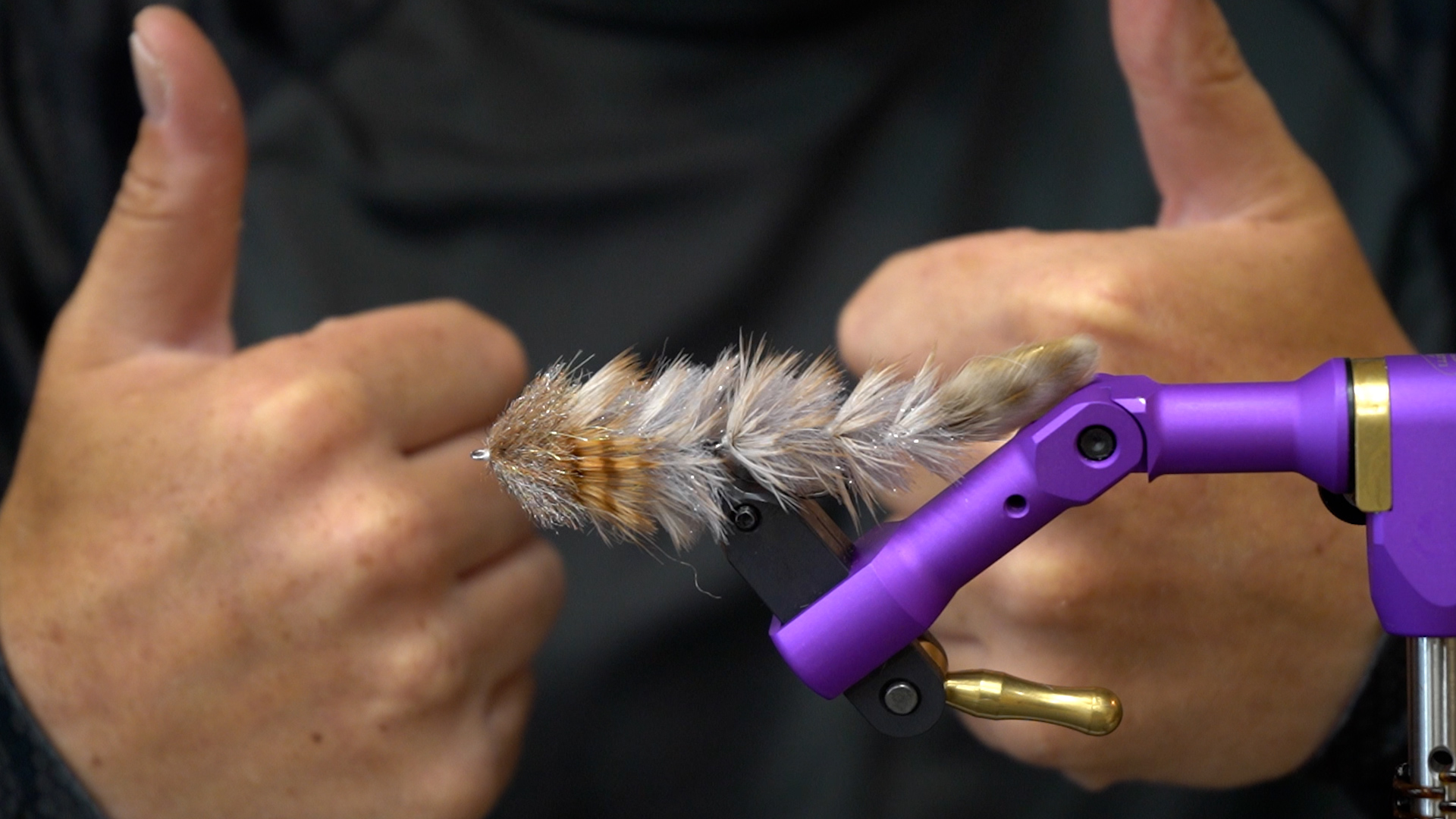
Step 15: Once the pec fins are tied in, you will finish the fly off with any brush you see fit. I really like the Streamer Brush from Renzetti. Tie in and wrap in dense side by side wraps all the way to the front and tie off and secure with Z-Ment. Be sure to clean the brush head up with scissors to bring a little shape and old fashion good looks to the front of the fly. 
Whether floating in a boat or wading, using a sinking, intermediate, or floating line, this fly can be used and adapted to all sorts of different conditions and fisheries. It is a quick and easy tie, by Changer standards and very fun to watch come through the water! Tie a few up for your local water and let us know what you think. If you post a picture on social media be sure to tag us and we will share it on our page.

Watch the full video here:

Unleash Your Casting Power with BC Big Fly Fly Rods from Temple Fork Outfitters

Introducing the BC Big Fly Fly Rods from Temple Fork Outfitters – the perfect tool for anglers casting giant flies to apex predators. Designed in collaboration with Blane Chocklett, these rods are a long-awaited addition to TFO’s lineup. Built with the highest modulus material and incorporating TFO’s Axiom technology, the BC Big Fly Rods redefine performance. 

Unlike other stiff rods, they offer both the energy necessary for long casts and incredible tracking and recovery, resulting in superior accuracy and distance. These rods excel at throwing sinking lines, which is essential for targeting Pike, Musky, and other large fish species.

Blane Chocklett himself shares his insights on the BC Big Fly Rods. He highlights the unique features of these rods, such as the Axiom technology that allows for quick recovery and shock absorption, enabling anglers to cast bigger flies without the rod breaking down. The rod’s fast action and lightweight design make it ideal for its intended purpose. 


The composite cork grip is specifically chosen to withstand the wear and tear of heavy sinking lines. The extended butt and foregrip offer increased stability and power, aiding in the figure eight technique and providing a comfortable grip. The nickel titanium recoil guides are durable and perfect for maneuvering around the boat without fear of damage.


These rods also come with an integrated hook keeper, allowing for easy storage of multiple flies, and the game changer logo engraved on the reel seat adds a touch of style. The BC Big Fly Rods are available in three models: 8 weight, 10 weight, and 12 weight, catering to different line weights and fishing scenarios. 

With TFO’s unconditional lifetime warranty, a rod sock, and a rod tube included, anglers can have peace of mind knowing their investment is protected. If you’re looking to tackle big fish and cast large flies, the BC Big Fly Rods from TFO are a must-have addition to your fly fishing arsenal.


To get your hands on these impressive rods, you can check them out on our website here. They have a wide range of Blane Chocklett’s products, and their knowledgeable staff can assist you in finding the perfect gear for your fishing adventures.

Don’t miss out on the opportunity to experience the power and precision of the BC Big Fly Rods – a game-changer for targeting apex predators.


A Quick Q&A with Flip Pallot: Walker’s Cay Chronicles, Fly Lines, and More

We recently had the privilege of hosting an exclusive Q&A session with the legendary angler and our dear friend, Flip Pallot. Known for his remarkable contributions to the fishing world, Flip shared captivating stories and insights during the interview. From discussing the origins of the iconic Walker’s Cay Chronicles to shedding light on the intricacies of fly lines, Flip’s wealth of knowledge and experiences left us in awe. If you’re curious to learn more, make sure to check out the full video on our YouTube channel.

The Origins of the Walker’s Cay Chronicles

One of the highlights of our Q&A was Flip Pallot’s account of how the Walker’s Cay Chronicles came to life. The series was born out of a fortuitous encounter between Flip’s wife, Diane, and one of the owners of Walker’s Cay during a Pan Am flight. The friendship that ensued led to the creation of a television series featuring real fishing enthusiasts exploring captivating destinations worldwide. Over the course of 16 seasons, the show became a lyrical tribute to the natural wonders of Walker’s Cay in the Bahamas, captivating audiences with its authentic storytelling.


Flip’s Favorite Fly Rod of All Time

When asked about his favorite TFO (Temple Fork Outfitters) fly rod, Flip didn’t hesitate to mention the Mangrove Coast. This remarkable rod, an improved version of the beloved Mangrove series, has garnered immense praise and rave reviews within the fly fishing community. Its exceptional performance and craftsmanship have made it a go-to choice for anglers worldwide. Flip’s enthusiasm for the Mangrove Coast was contagious, and he highlighted its sheer pleasure both in casting and fighting fish. If you’re in search of a top-notch saltwater rod, the Mangrove Coast comes highly recommended.


Fly Line Loops and Water Absorption

During the Q&A, Flip addressed an interesting question regarding cutting welded loops in fly lines. Some anglers wondered if water absorption would be a concern if the line’s core was exposed. Flip reassured us that fly lines’ cores are anhydrous, meaning they can’t absorb water. Additionally, when tying a snell around the butt section of the line, the tightly closed connection prevents any water from entering. The unique nature of the snell and the core’s corkscrew effect inside ensure a watertight seal. So rest assured, cutting welded loops won’t lead to water absorption or sinking lines.

The Love for Hunting and Fishing

One of the final questions posed to Flip was about his preference between hunting and fishing. True to his nature, Flip brilliantly stated, “Is there a difference?” He beautifully expressed how the fishing he loves most feels like hunting, spending time in shallow waters, hunting for fish. Flip’s passion knows no bounds, whether he’s on the water or in the woods pursuing turkeys. The love for both activities intertwines, making it challenging for him to choose one over the other.


The Q&A session with Flip Pallot left us with an even deeper appreciation for his immense contributions to the fishing world. From the inception of the Walker’s Cay Chronicles to his favorite fly rod and insights on fly lines, Flip’s expertise and genuine passion shone through. If you’re as captivated as we were, don’t miss out on the full video on our YouTube channel. Join us in celebrating the remarkable career and wisdom of Flip Pallot, a true legend in the world of angling.


To watch  the full Q&A with Flip Pallot, filled with intriguing stories and valuable insights, head over to our YouTube channel. Click here to watch the entire video and explore more exciting fly fishing content.